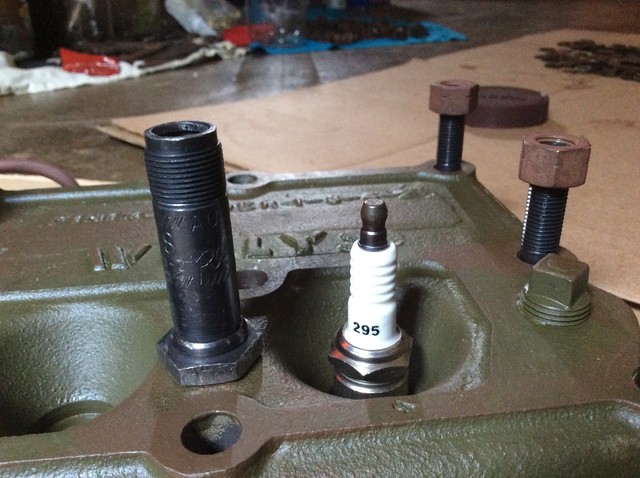
Don,
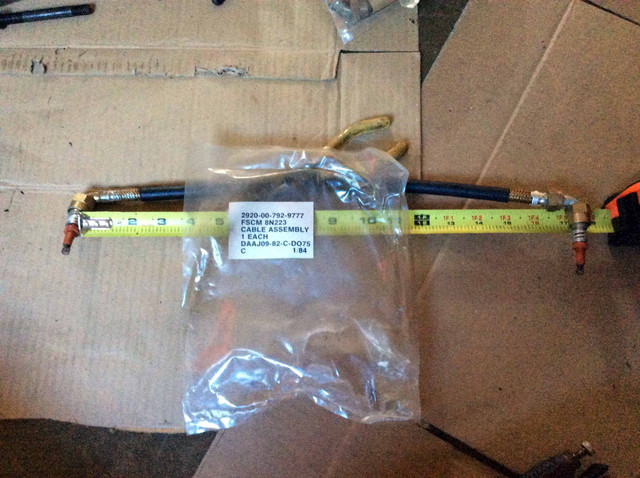
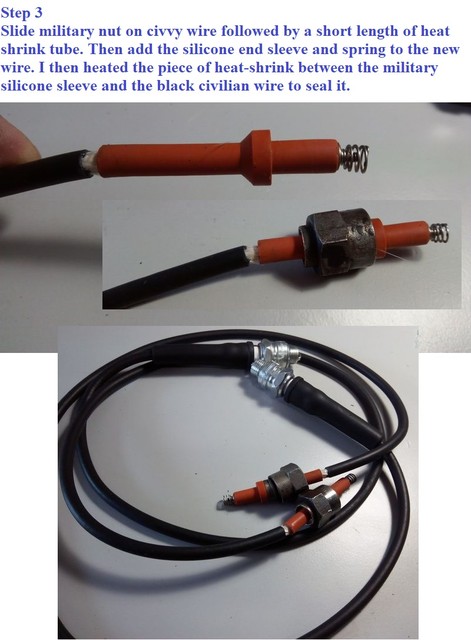
While your plug wires might work on the M38, they obviously aren’t “correct” for a M38. From what I can determine, they belong on the M274 Mule. I didn’t try to find the Army TM ORD9 for the Mule to confirm it, but at least one vendor I found says they’re for the M274, here:
https://www.easternsurplus.net/PartDeta ... -M274-Mule
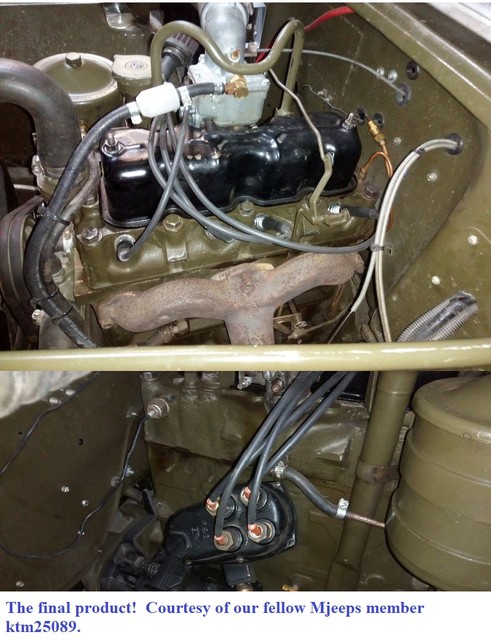
The M38 plug wires are called out in the September 1955 ORD9 on page 147. The wire for plug #1 is 23-3/4 inches long, G740-7528173, and the wires for plugs #2, #3, and #4 are 19-3/4 inches long, G740-7528174. Your Mule wires are all 18 inches but would likely reach anyway.
We already discussed the pitfalls of buying old government surplus parts. Are the plug wires in your bag really what’s described on the label? Are the wires otherwise not defective government rejects that got sold on the civilian market?
According to the label, your wires were made in 1984, which makes them 37 years old. Assuming you intend to use them anyway, if the end connectors aren’t brittle or rotted and will hook up correctly, before using them I believe I’d test them for insulation resistance breakdown using a megohmmeter. I happen to have one (AN/PSM-25 Test Set, Insulation Breakdown), and most any old-school radio repair shop or HAM radio operator could also test them for you. Or, you could just hook them up and keep your fingers crossed. The first 6-8 pages here describe it pretty well:
https://www.instrumart.com/assets/Megge ... esting.pdf
Do you have a copy of Army TM9-8000, Principles of Automotive Vehicles? If not, I suggest you consider buying one and read Section 5 starting on page 196. You can buy a good copy most anytime on fleabay for about $20. Then you might understand your spark plug questions better.
Spark plugs are HIGH VOLTAGE components, input and output. They operate on KILO-VOLTS (thousands of volts), about 20,000 for the L134 motor. The spark plug gets HIGH VOLTAGE from the distributor that gets it from the ignition coil. The ignition coil is the component that takes a 24 volt (or 12 volt) input and increases it to 20,000 volts through the magic of induction. In other words, a spark plug has kilo-volts going in and kilo-volts going out ---- it doesn’t matter if your jeep has a 24-volt or a 12-volt electrical system.
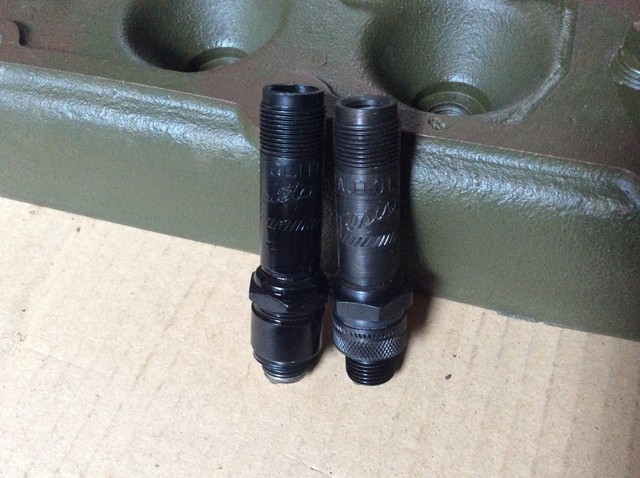
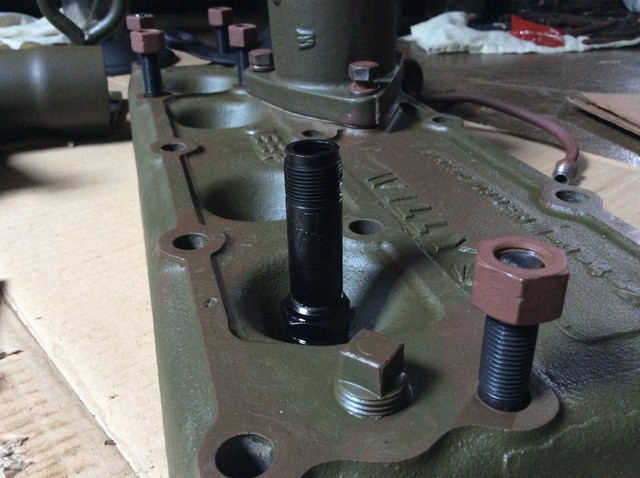
Therefore, yes, the Autolite 295 plug works well on the M38. It’s the non-waterproof civilian equivalent to the waterproof military Autolite 2243. The Champion J8 (J8C) is also a good equivalent. There are others. When you go to the auto parts store and tell them you have a CJ3A, most can actually look them up for you. Naturally, you still have to trust, but verify.
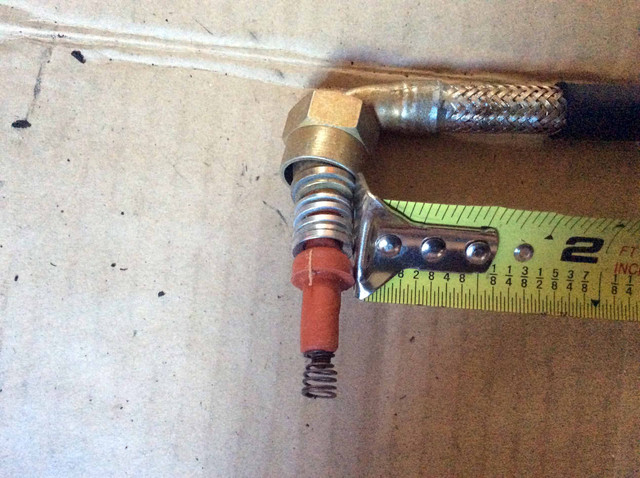
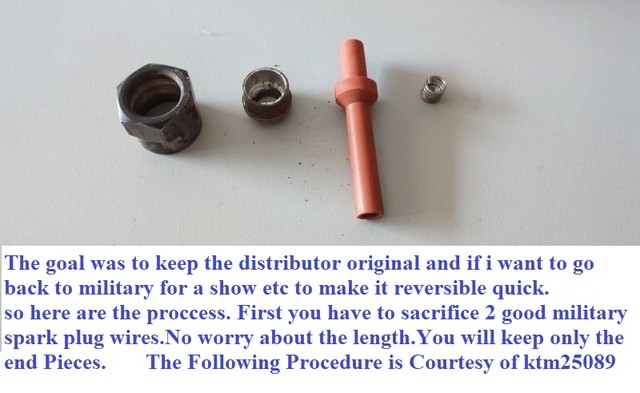
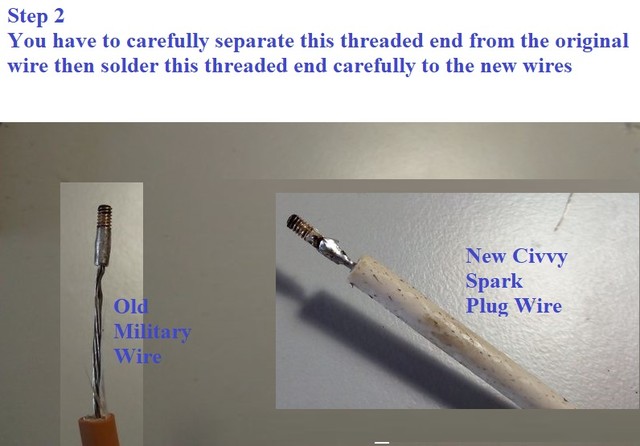
Your question “At least one brand of adapter says you can use NOS type M38 plug wires with the modern day plug. How do they do that?” is entirely perplexing to me. What do you think the word “adapter” means? Have you seen these 3 photos that show it very clearly?
https://store.midwestmilitary.com/product-p/mwm259.htm Or these photos?:
https://www.ebay.com/itm/274426613655?h ... Swbl9d6aBx
I think your self-described “silly idea” to cut, bore out, and glue up some DIY spark plugs is just that, laughable. What could go wrong with making your own HIGH VOLTAGE components?

The adapters aren't "mostly cosmetic", they're entirely functional. And they're a great example of American ingenuity. Yes, expensive. The price you pay (one time) for ingenuity. Or, you can try to corner the market on 2243's (consumable, throw away when worn, out of production) spark plugs for the same price as an adapter.
Ron D.
1951 M38 Unknown Serial Number
1951 M100 Dunbar Kapple 01169903 dod 5-51
“The only good sports car that America ever made was the Jeep."
--- Enzo Ferrari